An immersive virtual and mixed reality experience designed to redefine how users visualise and interact with interior spaces. This project demonstrates how VR and MR can be used to create realistic, interactive environments that allow users to explore spatial layouts in a more intuitive and engaging way compared to traditional visual presentations.
Challenges
Presenting interior spaces using static images, videos, or 2D layouts often limits a user’s ability to fully understand scale, depth, and spatial flow. This creates challenges for stakeholders who need clarity before making decisions.
Common challenges included:
- Difficulty visualising space, proportions, and layout accurately
- Limited engagement with static or non-interactive content
- Misalignment between expectations and final outcomes
- Longer feedback and approval cycles due to unclear visualisation
Solution
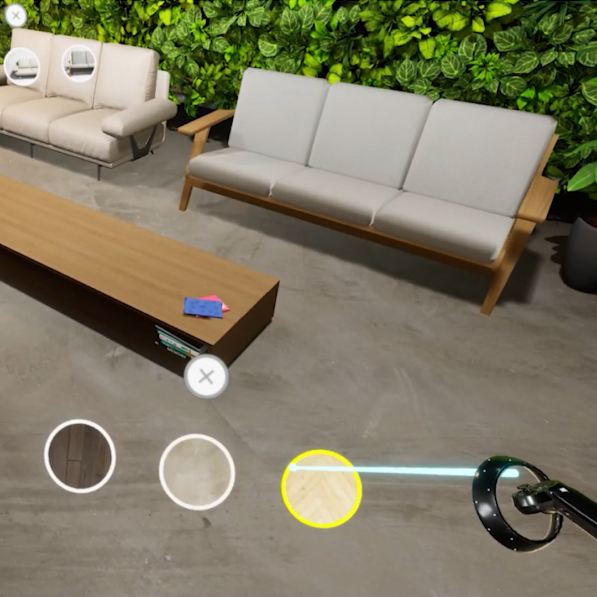
The Interactive VR Interior Experience addresses these challenges by placing users directly inside a fully immersive 3D environment. Using virtual and mixed reality technologies, users can explore interior spaces as if they were physically present.
The solution allows users to move freely within the environment, observe spatial relationships in real time, and gain a more realistic understanding of how a space feels and functions. This interactive approach bridges the gap between conceptual design and real-world perception.
Key Features
- Immersive 3D interior visualisation with realistic scale and depth
- Interactive navigation that allows users to explore from multiple viewpoints
- Spatial awareness that enhances understanding of layout and flow
- Mixed reality elements that blend digital environments with physical movement
Benefits & Outcomes
Improved Spatial Understanding
Users gain a clearer and more accurate understanding of interior layouts, dimensions, and spatial relationships, reducing uncertainty and misinterpretation.
Higher Engagement Levels
Interactive exploration encourages deeper engagement compared to static visuals, making the experience more memorable and impactful for stakeholders.
More Efficient Feedback and Decision Making
With a realistic representation of the space, feedback becomes more specific and actionable, helping to reduce revision cycles and speed up approvals.
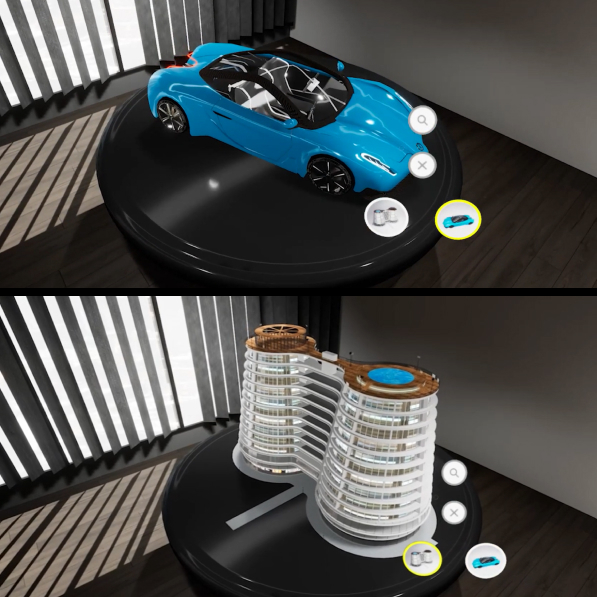
Flexible Use Across Industries
The same VR and MR framework can be applied to interior design, architecture, real estate, experiential marketing, and training environments, making it a versatile solution for various business needs.
Conclusion
The Interactive VR Interior Experience demonstrates how virtual and mixed reality can elevate spatial visualisation beyond traditional methods. By allowing users to experience a space rather than imagine it, this solution improves clarity, engagement, and decision making, setting a new standard for immersive digital experiences.


