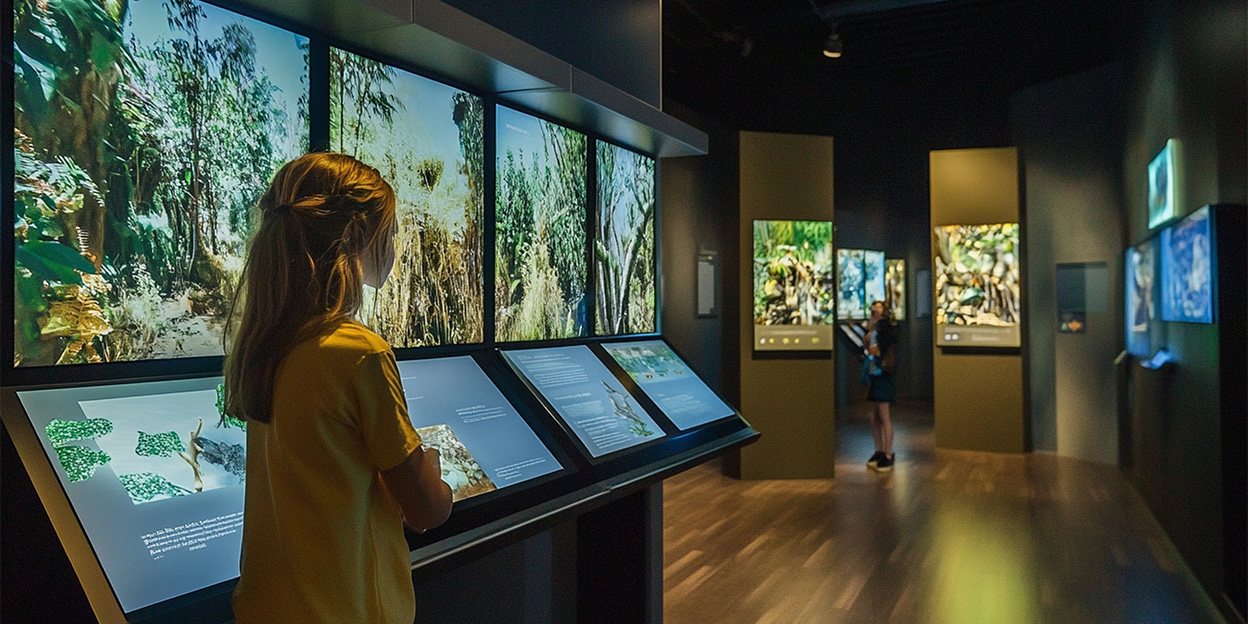
An interactive experience gives people the opportunity to do more than simply look at a screen, watch a video or listen to a presentation. It invites them to participate, explore and make choices. From touchscreen displays to immersive digital environments, businesses are finding new ways to make customer interactions more engaging and memorable.
Instead of delivering the same information to everyone, an interactive experience lets you create more meaningful connections with your audience. Whether you are showcasing a property, launching a product or designing a customer experience centre, the right interactive technology can turn an ordinary visit into something worth remembering.
What Is an Interactive Experience?
An interactive experience is a digital or physical experience that responds to a person’s actions. Visitors might tap a touchscreen, explore a 3D model, play a game or interact with a digital installation to discover information at their own pace.
Unlike traditional presentations, interactive experiences encourage active participation. People can choose what they want to see, explore different options and receive information that matches their interests.
For example, a property developer could use an interactive display to let visitors explore apartment layouts, compare facilities and view different interior designs. Rather than relying entirely on brochures or a sales presentation, visitors can discover the details that matter most to them.
Why Are Interactive Experiences Important for Businesses?
Customer expectations continue to evolve. People increasingly value experiences that are convenient, relevant and enjoyable. Interactive technology gives businesses more ways to meet these expectations.
1.Encourage Greater Customer Engagement
When people can interact with content, they have a reason to pay attention. Touchscreens, interactive games and digital installations invite visitors to take part instead of passively receiving information.
For example, a brand activation could include a digital quiz that helps visitors discover which product suits their needs. This makes the experience more engaging while helping the brand communicate its message.
2.Make Complex Information Easier to Understand
Some products and services are difficult to explain through text or static images alone. Interactive visualisations can make complicated ideas easier to explore.
A technology company, for instance, could use a large interactive display to demonstrate how its solutions work. Visitors can select different features, view animations and explore real-world applications without sitting through a lengthy presentation.
3. Create More Personalised Experiences
Different visitors have different interests. Interactive experiences allow people to choose their preferred topics, products or activities.
In a showroom, visitors could select their requirements and explore suitable product configurations. This gives them greater control over their experience and helps sales teams have more relevant conversations.
4. Support Better Business Conversations
An interactive experience can also be a practical sales tool. Instead of relying on a standard presentation, sales teams can respond to questions by showing relevant information, demonstrating features or exploring different scenarios with potential customers.
This can help customers understand the value of a product or service and make more informed decisions.
Types of Interactive Experiences Businesses Can Use
There is no single format that works for every business. The best approach depends on your audience, objectives and environment.
Interactive Touchscreens and Displays
Interactive touchscreens allow visitors to browse information, explore products and navigate digital content at their own pace. They are useful in showrooms, retail spaces, exhibitions and customer experience centres.
For example, a property showroom could use a touchscreen to display building layouts, amenities and surrounding facilities in one convenient interface.
Immersive Digital Experiences
Immersive experiences use technologies such as virtual reality (VR), augmented reality (AR), projection mapping and large-scale digital displays to create engaging environments.
A visitor might explore a virtual destination, see a product in a simulated setting or interact with digital content projected across a physical space. These experiences are particularly useful when a product or environment is difficult to demonstrate in person.
Gamification and Interactive Activities
Gamification introduces elements such as challenges, rewards, quizzes and competition into an experience.
At an exhibition, visitors might complete a short digital challenge to learn about a company’s products. This makes information more enjoyable to discover and can encourage visitors to spend more time engaging with the brand.
Interactive Experience Centres
An interactive experience centre combines physical spaces, digital technology and storytelling to communicate a brand’s products, services or vision.
Visitors might move between interactive displays, product demonstrations and immersive installations. When these elements work together, the space becomes more than a showroom. It becomes an environment where customers can explore, learn and connect with the brand.
Real-World Applications of Interactive Experiences
Interactive technology can support different business objectives across a range of industries.
Property and real estate: Let potential buyers explore floor plans, compare layouts and visualise spaces before making a decision.
Retail and product showcases: Help customers discover product features, compare options and explore configurations through interactive displays.
Corporate experience centres: Present company capabilities, demonstrate innovations and communicate complex solutions through engaging digital content.
Exhibitions and events: Attract attention with interactive installations, digital games and hands-on demonstrations that encourage visitors to participate.
Education and training: Help learners explore concepts through simulations, interactive visualisations and scenario-based activities.
Across these applications, the goal is not simply to introduce more technology. It is to use technology to make information easier to understand and interactions more meaningful.
How to Design an Effective Interactive Experience
Adding a touchscreen or immersive display does not automatically create a good experience. Careful planning helps ensure that the technology serves a clear purpose.
Start With Your Audience
Understand who will use the experience and what they need to learn or achieve. A corporate visitor exploring business solutions may need a different experience from a shopper comparing products.
Define a Clear Objective
Decide what success looks like. You might want visitors to understand a product, explore a service, remember a brand message or start a conversation with your sales team.
Keep the Interaction Simple
Visitors should be able to understand how to use the experience without needing lengthy instructions. Clear navigation, readable content and intuitive controls make participation easier.
Connect Digital Content With the Physical Space
Consider how screens, lighting, physical displays and people interact within the environment. A well-designed experience should feel connected rather than like a collection of separate technologies.
Measure What Works
Depending on the technology and setup, you may be able to track interactions, content preferences, session duration or visitor responses. Use these insights to understand what attracts attention and identify opportunities to improve the experience.
For further guidance on designing useful digital experiences, the Nielsen Norman Group explains the broader concept of user experience and why it involves more than the interface alone.
What Is the Future of Interactive Experiences?
Interactive experiences are becoming more adaptable as businesses explore new technologies and ways to engage their audiences.
AI-powered personalisation can help tailor content and recommendations to visitors’ interests, where appropriate data and systems are available.
Connected physical and digital environments can bring together touchscreens, sensors, digital content and spatial design to create more seamless experiences.
More meaningful interaction data can help businesses understand how people engage with their spaces and content, supporting more informed decisions about future improvements.
However, technology should always serve the experience. An elaborate installation may attract attention, but it will have limited value if visitors cannot understand its purpose or find it difficult to use.
The most effective interactive experiences combine useful content, thoughtful design and technology that supports a clear business objective.
Create More Meaningful Customer Experiences With IXEN
An effective interactive experience helps your audience move from simply seeing information to actively exploring it. Whether you want to improve a showroom, create an immersive brand environment or make complex products easier to understand, the right combination of design and technology can make a real difference.
At IXEN Interactive, we develop interactive digital solutions that help businesses create engaging customer experiences. Our work brings together interactive technology, digital content and experience design to support your business goals.
Explore our interactive solutions to discover how technology can enhance your customer engagement. If you have a project in mind, contact IXEN Interactive to discuss your requirements.


