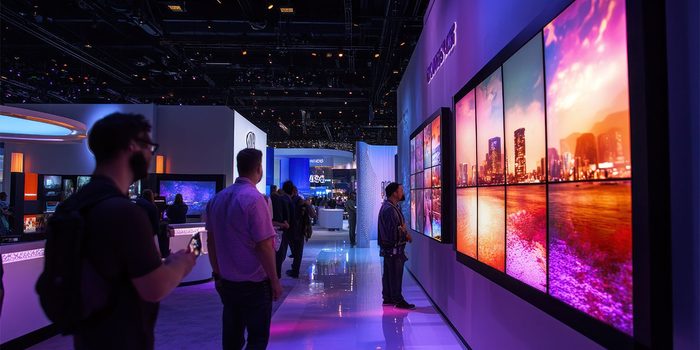
In a world where customers see countless advertisements every day, getting their attention is only half the battle. Businesses need to find ways to make their brands more memorable. This is where experiential marketing companies come in. They help brands move beyond traditional advertising by creating interactive, engaging and meaningful experiences that allow customers to connect with a brand in a more personal way.
From immersive brand activations and interactive displays to digital installations and experience centres, experiential marketing gives customers something to see, touch and participate in. Rather than simply telling people what a brand offers, it allows them to experience it for themselves.
But what exactly do experiential marketing companies do, and how can the right approach benefit your business?
What Do Experiential Marketing Companies Do?
Experiential marketing companies specialise in creating experiences that bring brands closer to their audiences. Instead of relying solely on advertisements, brochures or social media campaigns, they use physical and digital experiences to encourage direct customer interaction.
Depending on their expertise, these companies may offer services such as:
- Brand activations: Interactive campaigns that introduce products or services through engaging activities and experiences.
- Immersive experiences: Digital environments that use projection mapping, virtual reality (VR) or augmented reality (AR) to capture attention.
- Interactive displays: Touchscreens and digital installations that allow visitors to explore information at their own pace.
- Gamification: Games, challenges and rewards that encourage participation and make brand interactions more enjoyable.
- Experience centers: Dedicated spaces where customers, investors and business partners can explore a company’s products, services and capabilities.
The goal is simple: turn passive audiences into active participants.
Why Are Businesses Investing in Experiential Marketing?
Traditional marketing is still important, but customers increasingly expect more engaging ways to interact with brands.
A well-planned experience gives people an opportunity to understand a product or service rather than simply read about it.
Here are some reasons why businesses are investing in experiential marketing.
1. Create Stronger Customer Engagement
People are more likely to pay attention when they can actively participate.
For example, instead of displaying product information on a static screen, a business could introduce an interactive touchscreen that allows visitors to explore product features, compare options or discover different solutions.
This makes the experience more engaging while giving customers greater control over what they want to learn.
2. Make Your Brand More Memorable
A memorable experience can leave a stronger impression than a standard advertisement.
Whether it is an immersive digital installation, an interactive product demonstration or a creative brand activation, giving customers something interesting to experience can help your business stand out.
Research by Freeman found that 95% of attendees reported greater trust in brands after participating in an in-person event. This highlights the value of creating opportunities for meaningful face-to-face brand interactions.
You can read more in the 2025 Freeman Trust Report.
3. Communicate Complex Information More Effectively
Some products and services are not easy to explain through text or traditional presentations.
This is particularly relevant for businesses in property development, manufacturing, engineering and technology.
Interactive technology can simplify complex information through visual demonstrations, 3D models, animations and touchscreen experiences.
For example, a property developer could use an interactive digital presentation to let potential buyers explore different property layouts, facilities and development features.
4. Encourage Meaningful Customer Interaction
Experiential marketing creates opportunities for businesses to understand what interests their audiences.
Interactive experiences can also collect useful engagement data, such as popular product selections, visitor preferences and frequently explored information.
When used appropriately, these insights can help businesses improve their marketing strategies and create more relevant customer experiences.
Popular Experiential Marketing Ideas for Businesses
Experiential marketing does not have to involve a large-scale event or an elaborate campaign. Sometimes, a well-designed interactive experience within an existing business space can make a significant difference.
Here are some practical examples.
Interactive Touchscreen Experiences
Touchscreen displays allow visitors to explore products, services and company information independently.
They can be used in showrooms, exhibitions, retail environments and corporate experience centres.
For example, a manufacturing company could use an interactive product catalogue to showcase its product range, specifications and applications. Visitors can simply select the information they want to explore.
Immersive Digital Installations
Immersive installations use technologies such as large-format displays, projection mapping and motion sensors to create engaging environments.
These experiences can transform an ordinary space into an interactive brand environment, making them suitable for exhibitions, product launches and customer experience centres.
Gamification and Interactive Activities
Adding game elements to a brand experience can encourage visitors to participate rather than simply observe.
Businesses can introduce quizzes, interactive challenges, digital games or reward-based activities to make product discovery more enjoyable.
These experiences work particularly well at exhibitions, promotional events and public engagement campaigns.
Digital Experience Centres
A digital experience centre brings different forms of interactive technology together in one dedicated space.
Businesses can use these environments to present their products, demonstrate solutions and communicate their brand story to customers, investors and business partners.
Unlike a one-off marketing event, an experience centre can provide a consistent brand experience throughout the year.
How to Choose the Right Experiential Marketing Company
With different companies offering different services, choosing the right partner requires more than looking at their portfolio.
Here are a few things to consider before making your decision.
1. Understand their capabilities
Some experiential marketing companies specialise in event management and brand activations, while others focus on digital experiences, interactive technology or immersive environments.
Look for a company whose capabilities match the experience you want to create.
2. Look beyond visual design
An attractive experience is a good starting point, but it should also serve a purpose.
Consider whether the proposed solution encourages interaction, communicates your message clearly and supports your business objectives.
3. Consider technology and integration
If your project involves interactive displays, touchscreens or digital installations, check whether the company can manage both the software and hardware requirements.
Having these capabilities under one roof can make project coordination and implementation more straightforward.
4. Review relevant project experience
Ask to see examples of completed projects, demonstrations or case studies.
This helps you understand how the company approaches different challenges and whether its experience is relevant to your requirements.
5. Think about long-term value
Consider whether the experience can be updated, expanded or reused for future campaigns.
For example, an interactive showroom solution may continue to support sales presentations long after its initial launch.
The Growing Role of Interactive Technology in Experiential Marketing
One of the biggest opportunities for experiential marketing companies is the combination of creativity and technology.
Customers are no longer limited to watching videos or reading information on screens. They can interact with digital content, explore virtual environments and influence what happens within an experience.
Technologies such as touchscreens, motion sensors, augmented reality, virtual reality and interactive projection are helping businesses create more engaging environments.
Personalisation is another important development. Interactive systems can present different information based on visitor interests, preferences or selections.
For businesses, this means creating experiences that are not only visually appealing but also relevant and useful to their audiences.
However, technology should always support the experience rather than become the main attraction. The best solutions are those that make it easier for customers to understand, explore and connect with a brand.
Creating Better Brand Experiences with IXEN Interactive
At IXEN Interactive, we believe that great brand experiences happen when technology and creativity work together.
We help businesses create interactive digital experiences that encourage engagement and make information easier to explore.
Our capabilities bring software, hardware, electronics and creative expertise together under one roof. This allows us to develop solutions such as interactive displays, touchscreen applications, immersive installations and digital experience centres.
Whether you are looking to transform a corporate space, improve your product presentations or create a more engaging environment for customers and business partners, the right interactive solution can help bring your ideas to life.
Explore our interactive solutions to discover how technology can support more meaningful customer experiences.
Ready to create a more engaging experience for your audience?
Get in touch with IXEN Interactive to discuss your next interactive experience project.


